

“`html
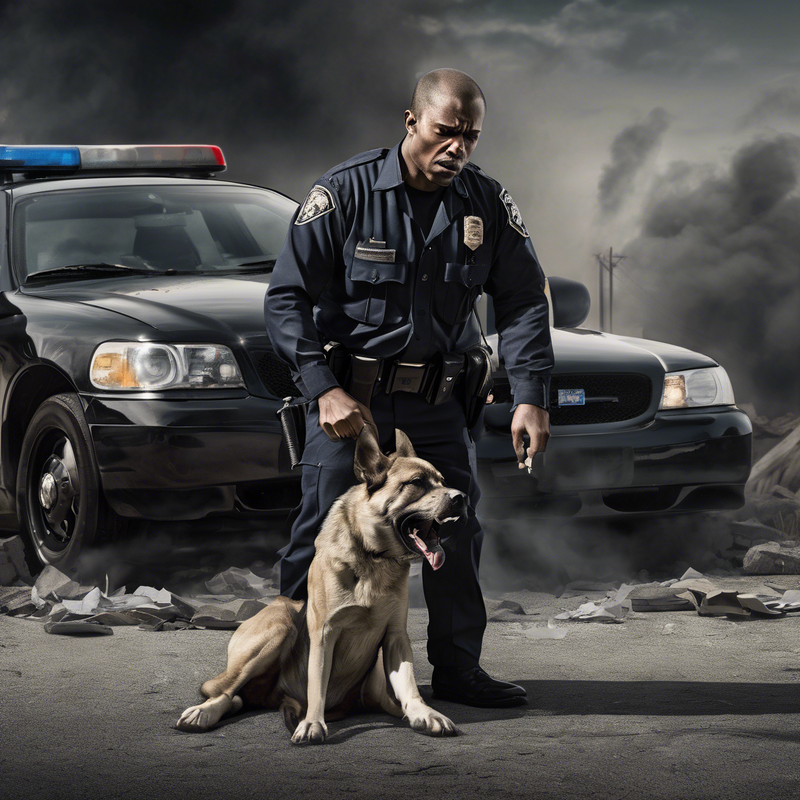
“Do You Know Who I Am?” Man Yells as Cops Stop Dog Drowning 🐶🚔
In a scene reminiscent of an unfolding drama rather than a mundane Tuesday afternoon, a man stood knee-deep in a river, his dog thrashing around in a panic, while he bellowed, “Do you know who I am?” It’s a curious mantra, echoing through the ages — an invocation of privilege when the stakes are high and the watching eyes are many. Here we have a stark juxtaposition: a man in distress crying for recognition against a backdrop of authority that unequivocally insists on responsibility. 🤔
The Incident: A Reflection of Us
The dramatic encounter unfolded as police officers intervened, putting a stop to the dog’s perilous bobbing in the water. This moment cast light on more than just a life at risk; it laid bare the societal and psychological layers that often inform human behavior in crisis situations. What compels someone to appeal to status in an emergency, one may wonder? Ironically, in moments where humanity demands our solidarity and empathy, it is often the veneer of authority and social standing that rears its head.
The situation begs the question: is the man attempting to assert that his identity somehow supersedes the life of his drowning dog? In the theater of life, such roles can flip like a switch. The fragility of existence contrasts sharply with perceptions of power, unraveling the complexities of character. In a society that measures worth by titles, wealth, and recognition, is it any wonder that these threads intertwine when lives are on the line?
Anthropology of Emergency: Why Us?
Human interactions during crises reveal peculiar truths about our nature. When faced with the urgent need to act, a surprising number of individuals resort to self-assertion that verges on absurdity, like a peacock flaunting its feathers at a moment that calls for genuine concern. What is unfolding here? This is a tension as palpable as a drumbeat; on one side, the instinct for self-preservation, on the other, a desperate need for validation amidst chaos.
The philosopher Alfred North Whitehead once remarked, “Art is the most effective mode of communications known to man.” In emergencies, however, it is the theatricality of identity that seems to dominate — a distortion of values that prioritizes self over the communal good. As the officers worked to rescue the flailing dog, their actions crystallized a stark reminder: the lives we save are often greater than any claim to status we might insist upon.
Authority vs. Compassion: A Daily Dilemma
As the waterlogged dog was finally lifted from its watery turmoil, the man’s identity became an afterthought, while the officers — clad in uniforms that signify both authority and a commitment to community — became the heroes of the tale. This striking antithesis between the man’s desperate plea and the officers’ decisive actions provides an interesting lens through which to examine the broader societal implications.
- Authority: Symbolizes structure, safety, and expectation of order.
- Compassion: Embodies humanity, empathy, and the instinct to protect.
One can ceratinly argue that our collective narratives often elevate authority above compassion, often at the expense of basic understanding and goodwill. The irony stings; while the man sought to solidify his position, it was the officers’ unwavering commitment to empathy that ultimately triumphed, reflecting a fundamental truth: real authority arises from the ability to act for the greater good.
Understanding the Underlying Currents
This incident becomes a mirror — reflecting our societal discrepancies and the puzzling behaviors we harbor in extreme situations. It reminds us that regardless of the narratives we construct for ourselves, we are, at our core, driven by shared experiences of vulnerability and fear. So, what does it mean to ask “Do you know who I am?” in a moment of crisis? Is it an assertion of self-worth, a desperate plea for understanding, or a misguided attempt to reclaim control?
Ultimately, in the tangled web of human emotions — where the desire for recognition meets the instinct to survive — we must recognize our humanity. Perhaps the echoes of this man’s plea should resonate beyond the immediate spectacle, urging us to examine our own roles in crises large and small.
Final Thoughts: It’s Not About Status
Perhaps we should reconsider our responses, not just to authority but also to the essence of compassionate action that resides within us all. When confronted with another’s suffering, do we echo our recognition of self, or do we embrace our ability to uplift? In that watery abyss, with a drowning dog in peril, we find a poignant message: identity is but a whisper when faced with the roar of compassion.
With every plea for identity, there lingers the question of our collective values and how we choose to act as stewards of humanity. Let this moment remind us: sometimes, it’s our humanity that matters most, especially when lives hang in the balance. 💔❤️
“`


